

In today’s fast-changing business world, making sure the transition into 2025 goes smoothly is more important than ever if companies want to keep thriving. I was chatting with John Anderson from Transition Strategies Inc.—he’s pretty much an expert in change management—and he said, “A Seamless Transition not only helps reduce chaos but also boosts team spirit and gets everyone more productive.” As companies gear up for big changes in technology, workforce shifts, and market trends, focusing on a smooth transition really isn’t optional anymore.
Getting through these transformations without a hitch calls for some solid planning and a proactive mindset. Businesses need to take a good look at where they’re at right now and try to predict what they’ll need down the line, so they can keep things running without hiccups. And honestly, keeping employees in the loop during all this is super important—when they’re on board, it makes a huge difference for how things turn out.
By using some of the best practices out there and leaning on the latest solutions, companies can make sure their move into 2025 isn’t just hassle-free but also sets them up to succeed despite any new challenges. When a transition goes off without a hitch, you tend to see better efficiency, happier customers, and an edge over the competition.

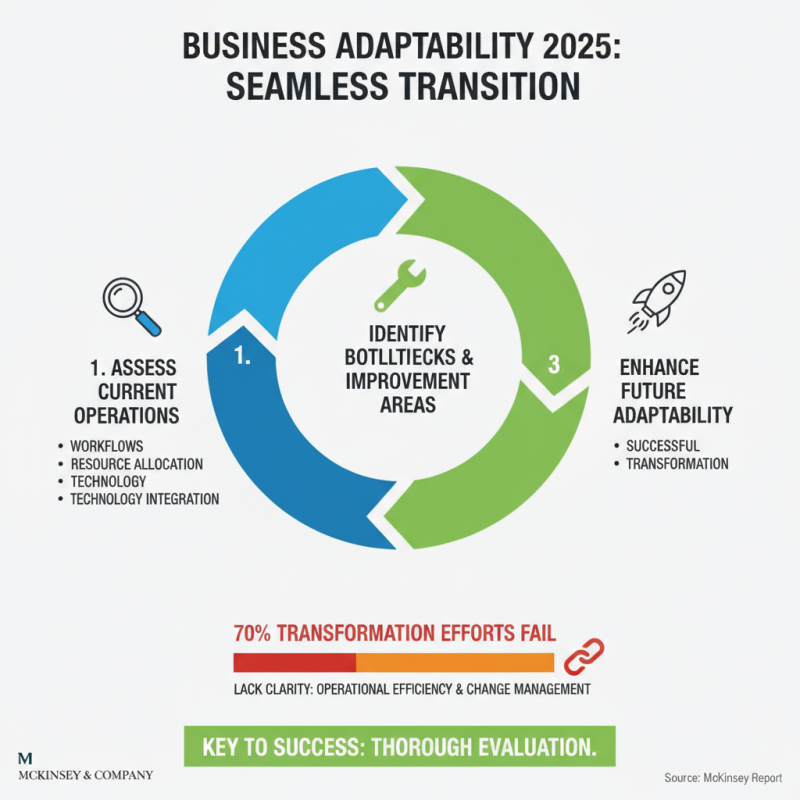
To ensure a seamless transition in 2025, businesses must prioritize the assessment of their current operations to enhance future adaptability. According to a report by McKinsey & Company, 70% of transformation efforts fail to achieve their desired outcomes primarily due to a lack of clarity around operational efficiency and change management. By conducting a thorough evaluation of existing workflows, resource allocation, and technology integration, companies can identify bottlenecks and areas for improvement, setting the stage for a more agile business model.
In tandem with operational assessment, organizations should leverage data analytics to support informed decision-making. A study from Deloitte indicates that companies effectively utilizing data analytics report a 5-6% increase in productivity and a significant boost in revenue growth compared to their competitors. By integrating advanced analytics into business assessments, enterprises can better understand market trends, customer needs, and operational performance. This strategic approach not only aligns current business practices with future goals but also empowers leaders to anticipate changes in the market landscape, ensuring they remain competitive and resilient as they transition into 2025.
As businesses prepare for the year 2025, identifying key trends and changes is crucial for ensuring a seamless transition. One of the most significant trends is the ongoing digital transformation, which is expected to accelerate. Companies must adopt advanced technologies such as artificial intelligence, machine learning, and automation to streamline operations and enhance customer experiences. This technological shift requires not only investment in software and tools but also a workforce that is skilled in these emerging technologies.
Another vital aspect to consider is the growing emphasis on sustainability and corporate social responsibility. Consumers are becoming increasingly aware of environmental issues and are favoring businesses that demonstrate a commitment to sustainability. Companies should look to integrate eco-friendly practices into their operations, from sourcing materials to delivery methods. This focus not only helps in compliance with anticipated regulatory changes but also enhances brand reputation, attracting a loyal customer base that prioritizes ethical consumption.
Lastly, workforce dynamics are changing, with remote work becoming a standard practice. Businesses must adapt to this new reality by fostering a hybrid work environment that promotes flexibility and engagement. Emphasizing mental well-being and creating a strong company culture despite physical distance will be essential. Ensuring effective communication and collaboration tools are in place will facilitate a smooth transition into this evolving work landscape, setting the stage for success in 2025 and beyond.
This chart highlights the projected impact of key trends on business success for the year 2025. Each bar represents the impact score of various trends ranging from digital transformation to enhanced consumer experience, indicating the importance of each aspect for businesses looking to thrive in the upcoming years.
Developing a strategic transition plan is crucial for businesses aiming to thrive in 2025. A well-structured transition includes identifying key objectives, setting realistic timelines, and assessing potential challenges. Begin by conducting a thorough analysis of your current operations and market position. This will help you pinpoint areas that require change and improvement, allowing for a smooth shift.
Tips: Engage your team in the planning process to gather diverse perspectives and foster a sense of ownership. Collaboration can spark innovative ideas and build morale, making the transition phase less intimidating for everyone involved. Additionally, invest in training and development to equip your employees with the necessary skills for the upcoming changes.
Furthermore, continuously monitor industry trends and emerging technologies. Being proactive in adapting to changes can be a competitive advantage. Establish a feedback loop with stakeholders and customers to refine your strategy as needed. An adaptable approach not only mitigates risks but also positions your business for sustained success in a dynamic environment.
Engaging employees during transitional periods is crucial for the overall success of a business. Research from McKinsey & Company highlights that organizations with high employee engagement are 21% more profitable and experience 41% lower absenteeism. In an era of rapid change, involving employees in the transition process not only enhances morale but also cultivates a sense of ownership and commitment. Employees who feel valued and included in decision-making are more likely to embrace changes positively, driving the organization toward its strategic goals.
Moreover, a report by Gallup indicates that companies with engaged employees are able to outperform their competitors by 147% in earnings per share. To leverage this potential, businesses should focus on transparent communication, frequent feedback, and collaborative problem-solving during transitions. Initiating workshops and brainstorming sessions allows employees to voice their concerns and contribute ideas, fostering a culture of inclusivity. By prioritizing employee engagement, companies can navigate the complexities of transition more smoothly, ensuring not only a seamless process but also paving the way for sustained success in 2025 and beyond.
| Dimension | Description | Engagement Level (%) | Impact on Outcomes |
|---|---|---|---|
| Communication | Effective information sharing during transition | 85% | High |
| Training Programs | Workshops to prepare employees for new processes | 75% | Medium |
| Feedback Mechanisms | Systems to gather employee feedback during transition | 80% | High |
| Support Systems | Resources available for employee assistance | 70% | Medium |
| Leadership Involvement | Active participation by leaders in the transition | 90% | Very High |
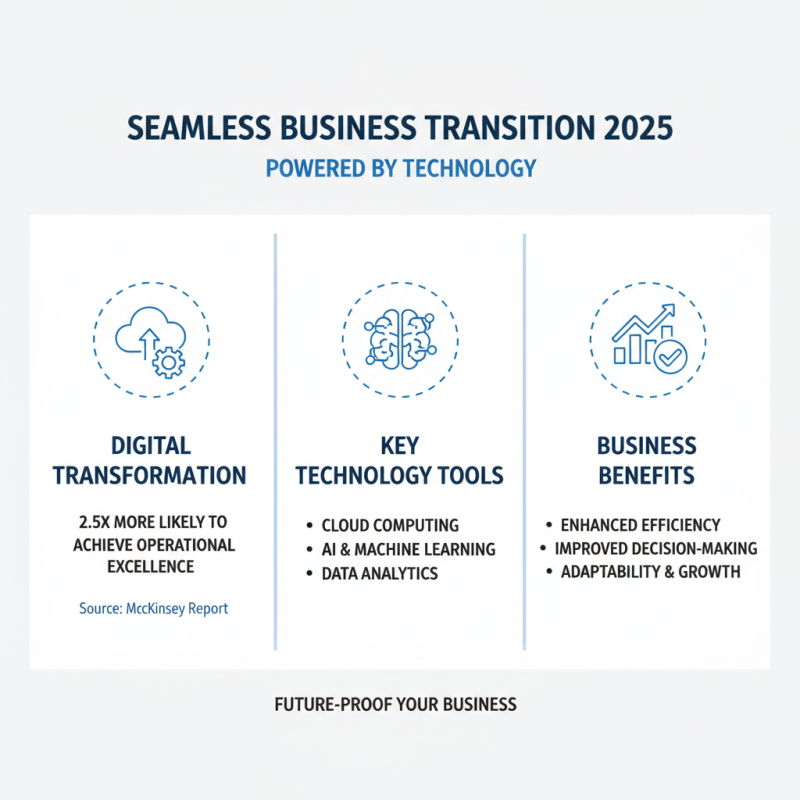
In preparing for a seamless transition in 2025, businesses must focus on implementing effective technology solutions. According to a recent report by McKinsey & Company, companies that prioritize digital transformation are 2.5 times more likely to achieve operational excellence. As firms adapt to rapidly changing market dynamics, leveraging advanced technology tools—such as cloud computing, AI, and data analytics—can enhance efficiency and improve decision-making processes.
One significant area of technology implementation is the integration of enterprise resource planning (ERP) systems. A study from Gartner indicates that organizations using ERP solutions experience a 15% increase in productivity due to streamlined operations and improved data accessibility. By harnessing such technologies, businesses can ensure that their processes are agile and that they maintain a competitive edge amid evolving industry standards. Investing in robust cybersecurity measures is also crucial, as a report from Cybersecurity Ventures predicts that cybercrime will cost the world $10.5 trillion annually by 2025, making the protection of digital assets a priority for smooth transitions.
Effective communication strategies are essential for businesses navigating transitions, particularly as they prepare for changes in 2025. During periods of transformation, clear and transparent communication helps to alleviate uncertainties and build trust among team members. Leaders should prioritize the establishment of a communication framework that encourages open dialogue, allowing employees to voice their concerns and share ideas. Regular updates via team meetings, newsletters, or internal platforms can ensure everyone is aligned and informed about the changes ahead.
Additionally, leveraging multiple communication channels can enhance engagement and information retention. Utilizing face-to-face meetings, video conferences, and digital messaging allows for tailored approaches that meet the diverse needs of the workforce. Training sessions focused on developing communication skills can also empower employees to express their thoughts and feedback effectively. By fostering an environment where communication is valued and prioritized, businesses can create a culture of collaboration that not only supports a seamless transition but also strengthens overall organizational resilience.
Monitoring progress and adjusting strategies are crucial components for ensuring a seamless transition in 2025. To begin with, businesses must establish clear, measurable goals that serve as benchmarks throughout the transition period. This involves regular assessments of key performance indicators (KPIs) that align with the firm's overall objectives. By consistently tracking these KPIs, businesses can identify trends and issues early on, allowing for timely interventions that can mitigate risks and optimize resource allocation.
Additionally, developing a flexible strategy that can adapt to changing market conditions is essential. As businesses monitor their progress, they should remain open to modifying their approach based on data-driven insights and external factors. This could mean pivoting product offerings, enhancing customer engagement tactics, or re-evaluating supply chain strategies. Encouraging a culture of continuous improvement within the organization fosters innovation and resilience, enabling businesses to not only navigate the challenges of 2025 but also seize emerging opportunities for growth.
: A strategic transition plan is crucial for businesses as it helps them identify key objectives, set realistic timelines, and assess potential challenges, ensuring a smooth shift towards growth and adaptability.
Businesses should begin by conducting a thorough analysis of their current operations and market position to identify areas that require change and improvement.
Engaging the team fosters diverse perspectives and a sense of ownership, which can lead to innovative ideas and help build morale during the transition phase.
Investing in training and development is essential to provide employees with the necessary skills required to adapt to the changes anticipated during the transition.
Establishing clear, measurable goals and regularly assessing key performance indicators (KPIs) allows businesses to track progress and identify trends or issues early on.
A flexible strategy is essential as it allows businesses to adapt their approach based on data-driven insights and external factors, ensuring they remain competitive in changing market conditions.
Businesses should be ready to make timely interventions to mitigate risks by leveraging insights gained from monitoring their KPIs.
Encouraging a culture of continuous improvement within the organization helps to promote innovation and resilience, enabling businesses to navigate challenges and seize new growth opportunities.
Establishing a feedback loop with stakeholders and customers is crucial as it helps refine strategies and adapt to evolving needs and preferences throughout the transition process.
By continuously monitoring industry trends and emerging technologies, businesses can proactively adapt to changes, giving them a competitive advantage in the market.
To ensure a seamless transition for your business in 2025, it's crucial to assess your current operations and identify key trends that will impact your industry. By understanding these changes, you can develop a strategic transition plan tailored to your business needs. Engaging employees in this process not only fosters a collaborative environment but also enhances the likelihood of successful outcomes.
Additionally, implementing appropriate technology solutions can facilitate a smoother transition, while effective communication strategies are essential for managing change and keeping everyone informed. Lastly, monitoring progress and being open to adjusting strategies will help maintain continuous success throughout the transition period. Embracing these practices will set your business on the path to achieving its goals in the coming years.