China’s window industry offers broad choices, but selecting a dependable White Window Frame manufacturer requires more than comparing prices. Factory experience, material control, surface quality, and after-sales support all influence long-term performance. This guide introduces ten notable Chinese manufacturers for buyers evaluating residential, commercial, and renovation projects.
The review focuses on practical evidence. We consider manufacturing history, product range, profile quality, hardware compatibility, and documented quality procedures. We also examine whether companies can provide samples, technical drawings, test reports, and stable export service. A well-made White Window Frame should open smoothly, maintain its finish, and resist common weather exposure. Small details matter, including corner joints, drainage holes, gasket fitting, and protective packaging.
Look closely.
Supplier claims still require verification. A polished website does not prove consistent production. Buyers should request recent project references, factory videos, inspection records, and clear warranty terms. Independent checks may also reveal differences between showroom samples and mass-produced units. That limitation deserves attention. Rankings can change as equipment, management, and market conditions change.
This introduction is designed to support a careful shortlist, not replace professional due diligence. Each manufacturer should be assessed against the project’s climate, building standards, installation method, and delivery schedule. Experienced buyers may value customization, while smaller projects may prioritize responsive communication and minimum order flexibility. The strongest choice is rarely the cheapest quote. It is the supplier that combines reliable production with transparent evidence and practical technical support.
Definition of White Window Frames and Their Main Applications
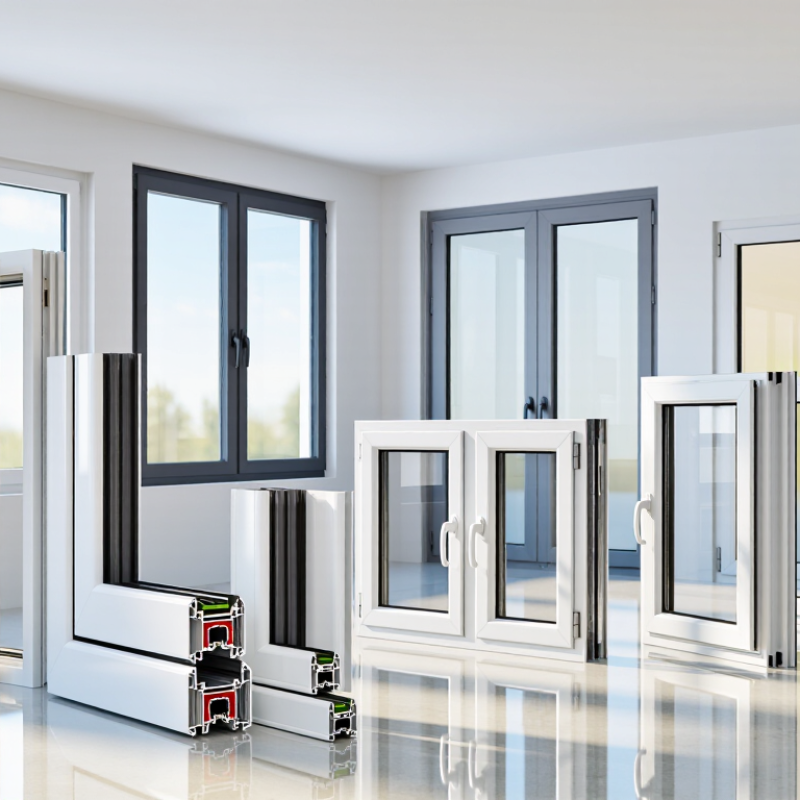
White window frames are window structures finished in a white coating or manufactured from naturally white polymer. The frame supports the glazing, seals the opening, and transfers wind loads to the wall. Common materials include uPVC, powder-coated aluminium, fiberglass, and composite sections. Aluminium Window Frame Types include sliding, casement, tilt-and-turn, fixed, and lift-and-slide systems.
Their applications are practical and wide-ranging. White frames suit apartments, detached houses, schools, offices, clinics, and retail buildings. They create a clean appearance and reflect more sunlight than dark finishes, although colour alone does not guarantee energy efficiency. The U.S. Department of Energy reports that windows can cause 25–30% of residential heating and cooling energy use through heat loss and gain. Frame design therefore matters: thermal breaks, airtight gaskets, insulated glazing, and correct installation should be assessed together.
The International Energy Agency reported that buildings consumed about 30% of global final energy in 2022. This places window selection within a larger efficiency discussion. In China, white frames are often used for balconies, residential façades, and interior-facing renovation projects because they coordinate easily with light walls and common flooring. Site experience suggests white surfaces also reveal dust, sealant marks, and installation damage quickly. That is useful, but not always attractive. Buyers should request U-value, air-tightness, water-tightness, coating, and hardware data rather than judging a sample by colour alone. Industry brochures sometimes make this choice look simpler than it is.
China Top 10 White Window Frame Manufacturers? — Definition of White Window Frames and Their Main Applications
White window frames are window frame profiles finished in white, most commonly manufactured from uPVC, aluminum, wood, or fiberglass. They are widely used in residential buildings, offices, schools, hospitals, hotels, and commercial properties because white profiles provide a clean appearance and can complement many architectural styles.
Chart explanation: The chart presents typical service-life ranges for major white window frame materials. Actual durability depends on profile quality, climate, installation, ventilation, maintenance, and exposure to sunlight or moisture. White frames are commonly selected for replacement windows, new residential construction, commercial buildings, and renovation projects.
How China’s White Window Frame Manufacturers Are Selected
Selecting China’s top white window frame manufacturers requires more than counting export volume. The Global Status Report for Buildings and Construction 2023 states that buildings consume about 30% of global final energy. Therefore, thermal performance deserves serious weight. I compare U-values, air leakage, water resistance, and wind-load test results. I also check whether reports match current Chinese standards, such as GB/T 8478 for aluminum windows.
Factory evidence matters. I review production lines, powder-coating or surface-finishing controls, welding accuracy, and incoming material records. A reliable supplier should provide recent laboratory reports, traceable batch numbers, and installation guidance. White frames can reveal defects quickly. Uneven gloss, yellowing, corner gaps, or weak drainage channels are not minor details. They often indicate inconsistent process control.
Independent testing adds authority. The International Energy Agency reports that building operations produce roughly 26% of global energy-related emissions, making efficient windows commercially important. However, catalog figures are not enough. I compare tested values with project samples, warranty terms, inspection records, and customer feedback from completed buildings. Factory size can help, but it should not dominate the ranking. Smaller facilities may offer stronger inspection discipline. That assumption needs verification, not praise. My selection also considers delivery consistency, packaging quality, replacement support, and transparent communication about limitations. A polished website proves very little.
Key Materials and Manufacturing Technologies Used in China
China’s top white window-frame manufacturers increasingly treat material selection as an energy decision, not only a design choice. The International Energy Agency’s Buildings 2023 report states that buildings consume about 30% of global final energy. This makes thermal performance a serious purchasing criterion.
uPVC remains popular because it resists moisture, corrosion, and routine repainting. Multi-chamber profiles reduce heat transfer, while fusion-welded corners improve air tightness.
Aluminum frames offer slimmer sightlines and strong structural support. Their thermal-break systems use reinforced polyamide strips between interior and exterior metal sections.
Powder coating creates the familiar white finish, but surface quality depends on pretreatment, curing temperature, and coating thickness. Fiberglass composites are also useful where low expansion and dimensional stability matter.
Glass technology must match the frame. Low-emissivity coatings, inert-gas filling, and warm-edge spacers can reduce indoor heat loss. The U.S. Department of Energy identifies low-e glazing as a key efficiency measure.
For a Frame Around Basement Window , manufacturers should add reliable drainage paths, reinforced corners, and corrosion-resistant fasteners.
Factory audits commonly review extrusion control, welding strength, water testing, and corner alignment.
Some suppliers still prioritize a bright surface over hidden drainage. That is a practical weakness worth questioning.
Automated inspection helps, but human checks remain necessary when tolerances are tight.
Profiles of China’s Top 10 White Window Frame Manufacturers
Profiles of China’s Top 10 White Window Frame Manufacturers
China’s top ten white window frame manufacturers reflect different strengths, from large automated factories to specialized extrusion workshops. Their profiles should be judged through production experience, not attractive catalogs alone. Some focus on standard white PVC frames for apartments, while others produce powder-coated aluminum systems for offices and villas. Several offer thermal-break designs, laminated glass options, and matching hardware. One manufacturer may excel in bulk orders, while another handles unusual dimensions more carefully.
Factory visits can reveal practical details. Look for clean extrusion lines, organized storage, calibrated cutting equipment, and sample corners that open smoothly. Ask how white surfaces resist yellowing, scratches, moisture, and coastal air. A reliable supplier should provide test reports, section drawings, installation guidance, and clear lead times. The keyword Aluminium Window Screen Frame also matters when buyers need ventilation without insects. Screen compatibility should be checked before production, not after delivery. Small oversights become expensive.
Tips: Request a physical corner sample. Compare frame thickness, weld quality, drainage holes, and gasket fit. Confirm color tolerance with a written standard. Ask for recent project references, but verify them independently. Do not choose only by price. I have seen cheaper frames require extra adjustment during installation. That lesson is easy to overlook. Also, factory capacity can change during peak seasons, so confirm schedules again before payment. A strong profile includes honest limitations, responsive engineers, and quality records that match the delivered windows.
China Top 10 White Window Frame Manufacturers? - Profiles of China’s Top 10 White Window Frame Manufacturers
| Profile | Primary Frame Material | White Finish Options | Typical Product Systems | Common Wall Thickness | Applicable Standards | Quality Documentation | Typical Export Applications |
| 01 | Aluminium alloy | Powder coating; standard white and custom white shades | Sliding, casement and awning windows | 1.2–2.0 mm | EN 755; EN 12020; ASTM B221 | Mill certificates, coating inspection and dimensional reports | Residential, apartment and light-commercial projects |
| 02 | Thermal-break aluminium | Polyester powder coating in white, ivory and off-white | Insulated casement and tilt-and-turn systems | 1.4–2.0 mm | EN 14024; EN 14351-1; ISO 10077 | Thermal-performance data, air-leakage tests and batch records | Energy-efficient homes and commercial façades |
| 03 | uPVC | White co-extruded or laminated exterior surfaces | Multi-chamber casement and tilt-and-turn windows | 1.8–2.5 mm profile wall | EN 12608; EN 14351-1; ASTM D1784 | Impact, weathering, weld-corner and dimensional testing | Cold-climate housing and replacement-window projects |
| 04 | Aluminium alloy | White anodized appearance or powder-coated finish | Narrow-frame sliding and lift-and-slide doors | 1.3–2.2 mm | EN 755; EN 12207; EN 12208 | Water-tightness, air-permeability and wind-load test records | Hotels, villas and high-opening residential spaces |
| 05 | Thermal-break aluminium | Durable white powder coating for coastal and urban use | Casement, fixed and curtain-wall-compatible windows | 1.6–2.5 mm | EN 14024; EN 13830; ISO 12944 | Corrosion-resistance, coating-thickness and profile tests | Office buildings, schools and public facilities |
| 06 | uPVC with galvanized reinforcement | Bright white, warm white and white wood-effect options | Single, double and triple-glazed window frames | 60–88 mm frame depth | EN 12608; EN 14351-1; ISO 9001 quality systems | Fusion-weld inspection, reinforcement checks and weather tests | Renovation, affordable housing and low-rise construction |
| 07 | Aluminium alloy | Fluoropolymer or powder-coated white finishes | Large-format fixed, sliding and folding systems | 1.5–3.0 mm | ASTM B221; AAMA 2603/2604/2605; EN 12210 | Finish-performance, structural and wind-load documentation | Luxury residences and Architectural Glazing projects |
| 08 | Thermal-break aluminium | Low-gloss white and high-durability white coatings | Tilt-and-turn, parallel-opening and French Windows | 1.4–2.0 mm | EN 14351-1; EN 12207; EN 12208; ISO 10077 | U-value calculations, acoustic data and operating-cycle tests | European-style residential and mixed-use developments |
| 09 | uPVC | Lead-free white profile formulations and laminated options | Sliding windows, bay windows and balcony doors | 58–82 mm frame depth | EN 12608; EN 14351-1; ISO 14001 environmental systems | Material composition, weathering and dimensional-stability records | Mass housing, residential towers and renovation programs |
| 10 | Aluminium alloy and hybrid systems | White powder coating with optional interior-exterior color combinations | Custom commercial windows, doors and façade units | 1.5–3.0 mm | EN 755; EN 14351-1; EN 13830; ASTM B221 | Project drawings, prototype approval and production inspection plans | Hotels, retail buildings and customized export projects |
Note: The profiles are presented without company or brand names. Product specifications, applicable standards and testing requirements should be verified against the manufacturer’s current technical documentation for each project.
Comparison of Products, Customization, Certifications, and Capacity
China Top 10 White Window Frame Manufacturers?
Comparing China’s leading white window frame manufacturers requires more than checking price. Product structure matters. Look for uPVC, aluminum, and thermally broken aluminum options. White powder coating should resist chalking, fading, and coastal humidity. The Grand View Research 2024 report valued the global windows and doors market at about USD 231.7 billion in 2023. It also forecasts a 6.1% annual growth rate through 2030. This demand increases pressure on suppliers to improve consistency.
Customization separates capable factories from trading companies. Ask for profile drawings, glass thickness limits, drainage details, and hardware samples. A serious supplier should explain U-value, air leakage, water tightness, and wind-load testing. Check ISO 9001 and ISO 14001 systems. Export projects may also require CE, NFRC, or local certification.
Capacity needs proof, not claims. Request monthly extrusion output, coating capacity, lead time, and inspection records. Full Frame Window Replacement projects need accurate opening measurements and stable batch colors. A ranking is never fully objective. Test samples before signing.
Tips: Compare three identical specifications. Ask for a corner-weld sample and a white-color tolerance range. Verify certificates with the issuing body. Review five recent projects, not just showroom photos. A factory producing 100,000 frames monthly may still struggle with small customized orders. That detail is easy to miss.
How to Choose a Reliable Chinese White Window Frame Manufacturer
Choosing a reliable Chinese white window frame manufacturer requires more than comparing catalog photos and low quotations. Request the company’s business license, factory address, production capacity, and export experience. Then verify these details through video calls, factory records, or an independent inspection agency.
Ask for physical samples, not only digital images. Check frame corners, drainage holes, gasket fit, surface smoothness, and color consistency under natural light. For PVC frames, review impact strength and weathering data. For aluminum frames, examine alloy grades, coating thickness, and adhesion test results. Reliable manufacturers should provide clear technical drawings and documented quality procedures.
Pay attention to communication. A capable technical team should explain tolerances, glass compatibility, hardware options, packaging, and installation conditions. Request a pre-production sample and define inspection points before mass production. Confirm lead times, replacement policies, payment stages, and responsibility for damaged goods in writing.
A low quote may still look attractive. That is where judgment gets tested. Some suppliers outsource extrusion, coating, or assembly without explaining it. Ask who controls each process and whether batch records are available. Small details matter, such as corner protection and moisture-resistant packaging. I would also compare two or three samples after several weeks of exposure. One sample may look excellent at delivery but reveal weaknesses later. No factory is perfect, so choose the supplier that responds honestly, corrects mistakes, and keeps its promises consistently.
Conclusion
This article provides a practical overview of China’s White Window Frame manufacturing industry, beginning with the definition, structural features, and common applications of white window frames in residential, commercial, and industrial buildings. It explains how manufacturers are evaluated according to product quality, material stability, production experience, customization capability, certifications, delivery performance, and after-sales support. The article also introduces commonly used materials, including uPVC, aluminum, and composite options, as well as manufacturing technologies such as extrusion, surface finishing, precision cutting, welding, assembly, and quality inspection.
The profiles of China’s top 10 White Window Frame manufacturers are presented through a neutral comparison of their product ranges, customization services, certification systems, production capacity, and export capabilities, without focusing on brand promotion. Finally, the article offers practical guidance for selecting a reliable supplier, including reviewing technical specifications, requesting samples, checking factory processes, confirming compliance requirements, evaluating communication efficiency, and clarifying pricing, lead times, packaging, warranty, and long-term cooperation terms.

 CASE
 NEWS
 INTRODUCTION
 HISTORY
 PRODUCT FILMS
 BIM & CAD
 +86 180 3872 3256
 Email