 CASE
 NEWS
 INTRODUCTION
 HISTORY
 PRODUCT FILMS
 BIM & CAD
 +86 180 3872 3256
Leave Your Message
- Tel/WhatsApp
- Tel/WhatsApp
-
 Email
If you're picking a Chinese manufacturer for a Seamless Transition project, price is only one piece of the puzzle. Actually, it's probably not even the first thing you should look at. You need to dig into their engineering depth, how they control materials, tooling capability, production capacity, and what after-sales support really looks like. A slick website? That doesn't tell you much.
This guide looks at ten China-based manufacturers for buyers who need transition solutions that are stable, accurate, and efficient. We consider things like factory experience, quality systems, how prototypes perform, delivery history, customization options, and how well they communicate. It also nudges buyers to check certifications, inspect samples, and ask for recent production references. The little stuff matters—joint alignment, surface finish, tolerance reports, even how strong the packaging is.
W. Edwards Deming once said, “Without data you’re just another person with an opinion.” That line still hits hard for Seamless Transition procurement. Good decisions should come from measurable evidence, not just impressive claims. A supplier might have fancy equipment and still struggle to stay consistent during high-volume production. That's a risk worth paying attention to.
The phrase Transition Seamless sounds straightforward, but in practice it often brings design changes, transport pressure, installation limits, and timelines that don't always behave. No ranking is perfect, either. Different buyers need different things, and a manufacturer that's great for one project may be a poor fit for another. So treat this China Top 10 list as a practical starting point—not a final verdict. Do your own due diligence on each company before signing anything. Look closely at the details. That's usually where reliability shows up.
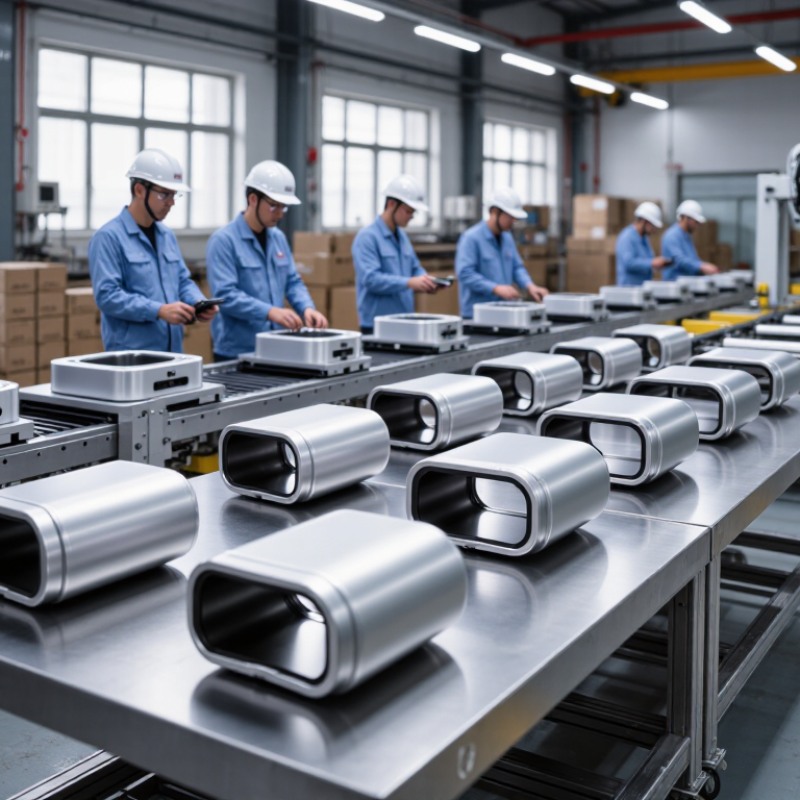
China Top 10 Seamless Transition Manufacturers for Buyers
Seamless Transition in industrial manufacturing means moving from one product, material, process, or production line to another with minimal disruption. It is more than installing new equipment. The transition must connect design data, machine settings, quality checks, worker skills, and supply schedules. A practical example is a factory changing from steel tubes to aluminum tubes without leaving unfinished parts beside the line. That pause is expensive. It still happens.
The International Federation of Robotics reported 541,302 industrial robot installations worldwide in 2023. This growth increases the need for compatible controls, accurate calibration, and reliable operator training. The World Economic Forum’s Future of Jobs Report 2023 estimated that 44% of workers’ core skills could be disrupted within five years. Therefore, buyers should examine training plans, not only machine specifications. A strong manufacturer should provide documented commissioning steps, test records, spare-part guidance, and measurable acceptance criteria. Ask how downtime is calculated. Ask what happens when the first trial fails. Many transition plans look smooth on paper, yet production teams discover gaps during night shifts.
Recent smart-manufacturing research also found that most industrial leaders view digital operations as important for competitiveness, while integration remains a major obstacle. This reflects factory experience: a dashboard cannot repair poor data or unclear responsibilities. Buyers should compare changeover time, first-pass yield, software compatibility, maintenance response, and worker feedback. The best Seamless Transition is visible in stable output, quiet handovers, and fewer emergency adjustments.
A seamless transition is a smooth, continuous change in diameter, geometry, material thickness, or process connection that minimizes turbulence, stress concentration, leakage risk, and installation difficulties.
| Rank | Anonymous Manufacturer Profile | Primary Seamless Transition Product | Common Materials | Typical Size Range | Typical Wall Thickness | Manufacturing Method | Applicable Standards | Quality Verification | Typical Applications |
|---|---|---|---|---|---|---|---|---|---|
| 01 | Profile A — carbon-steel process piping specialist | Seamless concentric and eccentric reducers | Carbon steel, low-temperature carbon steel | DN15–DN1200 | 2–60 mm | Hot forming with heat treatment | ASME B16.9, ASTM A234 | Dimensional inspection, hardness testing, hydrostatic testing | Oil, gas, water treatment, general process lines |
| 02 | Profile B — stainless-steel hygienic transition specialist | Sanitary reducers and gradual pipe transitions | 304/304L and 316/316L stainless steel | DN10–DN300 | 1.5–6 mm | Cold forming, polishing, and passivation | ASME BPE, ISO 2037, ASTM A403 | Surface-roughness measurement, dye-penetrant testing, weld inspection | Food, beverage, pharmaceutical, and biotechnology systems |
| 03 | Profile C — high-pressure forged fitting producer | Forged socket-weld and threaded transition fittings | Carbon steel, alloy steel, stainless steel | DN6–DN100; NPS 1/8–4 | Class 2000–6000 pressure classes | Closed-die forging and precision machining | ASME B16.11, ASTM A105, ASTM A182 | Ultrasonic testing, magnetic-particle testing, pressure testing | Power generation, chemical processing, high-pressure utilities |
| 04 | Profile D — large-diameter forming manufacturer | Large-diameter seamless and welded transition sections | Carbon steel, low-alloy steel, stainless steel | DN600–DN1800 | 8–80 mm | Hot pressing, roll forming, and controlled expansion | ASME B16.9, EN 10253-2, ASTM A234 | Radiographic testing, ultrasonic testing, dimensional mapping | Water transmission, marine systems, infrastructure pipelines |
| 05 | Profile E — nickel-alloy corrosion-resistant supplier | Corrosion-resistant reducers and custom transitions | Nickel alloys, duplex stainless steel, super duplex stainless steel | DN15–DN500 | 3–40 mm | Hot forming, solution annealing, and precision machining | ASTM B366, ASTM A815, ASME B16.9 | Positive material identification, ferrite testing, PMI documentation | Desalination, offshore systems, chemical and marine processing |
| 06 | Profile F — heat-resistant alloy transition producer | High-temperature pipe reducers and thermal transitions | Chrome-molybdenum alloy steel, heat-resistant stainless steel | DN25–DN600 | 3–50 mm | Hot forming and normalized or tempered heat treatment | ASTM A234, ASTM A182, ASME B16.9 | Tensile testing, impact testing, hardness testing | Boilers, steam systems, refineries, thermal power equipment |
| 07 | Profile G — low-temperature service fitting manufacturer | Impact-tested seamless transitions for cold service | Low-temperature carbon steel, nickel-bearing alloy steel | DN15–DN800 | 3–65 mm | Hot forming with controlled cooling and impact testing | ASTM A420, ASME B16.9, EN 10253-2 | Charpy impact testing, ultrasonic testing, heat-number traceability | LNG equipment, refrigeration, cryogenic and cold-climate pipelines |
| 08 | Profile H — precision-machined transition supplier | Machined adapters, bushings, and concentric transitions | Stainless steel, brass, carbon steel, engineering alloys | 6–250 mm outside diameter | 1–25 mm | CNC turning, boring, threading, and surface finishing | ISO 2768, ASME B16.11, customer drawings | Coordinate-measuring inspection, thread gauges, visual inspection | Instrumentation, automation, hydraulic and pneumatic assemblies |
| 09 | Profile I — custom engineering transition fabricator | Non-standard reducers, offsets, and multi-axis transitions | Carbon steel, stainless steel, alloy steel, aluminum | DN25–DN1500 | 2–75 mm | Hydraulic forming, segmented forming, and CNC finishing | ASME B16.9, EN 10253, project-specific specifications | 3D dimensional inspection, weld NDT, design-drawing verification | Skid systems, industrial machinery, construction and energy projects |
| 10 | Profile J — export-oriented piping component supplier | Standard seamless elbows, tees, caps, and reducers | Carbon steel, stainless steel, alloy steel | NPS 1/2–24 | Schedule 10–XXS | Seamless hot forming and calibrated end finishing | ASME B16.9, ASTM A234, ASTM A403, ASTM A420 | Material certificates, dimensional reports, visual and NDT inspection | Industrial distribution, mechanical installation, process piping |
Inspect the factory, not just its catalogue. Request production records, material certificates, and recent audit documents. A bright showroom proves very little. Ask to witness a sample build with corners, drainage, thresholds, and locking points.
Ask for U-values, air leakage, water resistance, wind resistance, and acoustic results. The tested frame, glass, seals, and dimensions should match your project. Generic laboratory sheets are insufficient. Otherwise, the numbers may look better than reality.
Check aluminium batches, glass thickness, hardware lots, and sealant records. Ask for glass safety certificates and fastener grades. Coastal projects need corrosion evidence. Small missing records can become expensive later.
Compare two or three production samples. Repeat opening cycles and measure roller load, panel alignment, drainage, and visible gaps. Request a factory video showing repeated operation. Quiet movement is useful, but it is not complete proof.
Request detailed CAD drawings, finish samples, wall-thickness limits, and panel-weight ranges. Confirm track length and maximum panel weight. Discuss concealed hinges, acoustic seals, drainage, and adjustment space. Perfectly rigid planning can create avoidable problems.
Request a current quality certificate and corrective-action records. Verify certificates through the issuing organization. Quality systems support controlled processes, but they cannot guarantee flawless workmanship. Sample approval remains necessary.
Ask for monthly output, tooling ownership, inspection frequency, and batch traceability. Confirm shipment tracking, packaging photographs, spare-parts commitments, and service response times. A low price means little when replacement parts arrive late.
An unfinished unit reveals welding, edge treatment, and hardware access. A completed installation exposes wall-condition problems and adjustment errors. Factory claims can be accurate, yet field performance may still disappoint. That possibility deserves honest reflection.
This guide explores how Seamless Transition solutions support industrial manufacturing by enabling smooth movement, alignment, connection, or process integration between equipment, materials, and production stages. It explains how buyers can evaluate Chinese manufacturers through engineering expertise, product consistency, material selection, manufacturing technology, testing procedures, certifications, delivery performance, and after-sales support. The focus is on practical factors that help purchasers identify dependable suppliers for demanding industrial applications.
The article also presents a buyer-oriented overview of China’s top 10 Seamless Transition manufacturers without relying on brand promotion. It reviews the key products and technologies commonly offered, including customized components, precision assemblies, automated production systems, and integrated transition solutions. In addition, it discusses quality standards, customization options, production capacity, inspection controls, and project support. By comparing technical capabilities, pricing, lead times, communication, and long-term cooperation potential, buyers can select a suitable manufacturing partner with greater confidence.